Many patients expect back surgery to bring an end to their pain, and in many cases, it does. However, 10-40% of patients experience persistent pain, clinically known as Failed Back Surgery Syndrome (FBSS).
Tried-and-true treatments like physical therapy and injections often fall short in cases of FBSS, leaving patients wondering where to turn. At Pain Management Specialists in Rockville and Frederick, MD, board-certified physicians Stuart Hough, MD, and Ramani Peruvemba, MD offer neuromodulation to target persistent pain signals and help patients reclaim their daily lives.
Why can pain continue after back surgery?
Spine surgery can successfully correct a structural problem, but pain may sometimes continue for other reasons. Irritated or damaged nerves and scar tissue can develop around spinal nerves, or the original source of pain may not have been completely resolved.
Persistent pain may include:
- Burning or electric nerve pain
- Shooting pain into the legs
- Numbness or tingling
- Chronic back pain
- Pain following nerve injury or surgery
Because there are many possible causes, an evaluation to identify the ongoing driver of your pain symptoms is an important step.
How does neuromodulation work?
Neuromodulation interrupts abnormal nerve firing at the source. These therapies deliver targeted electrical currents directly to hyperactive nerves, disrupting faulty pain messages before they reach your brain. Pain Management Specialists offer spinal cord stimulation (SCS) and dorsal root ganglion (DRG) stimulation.
Spinal cord stimulation
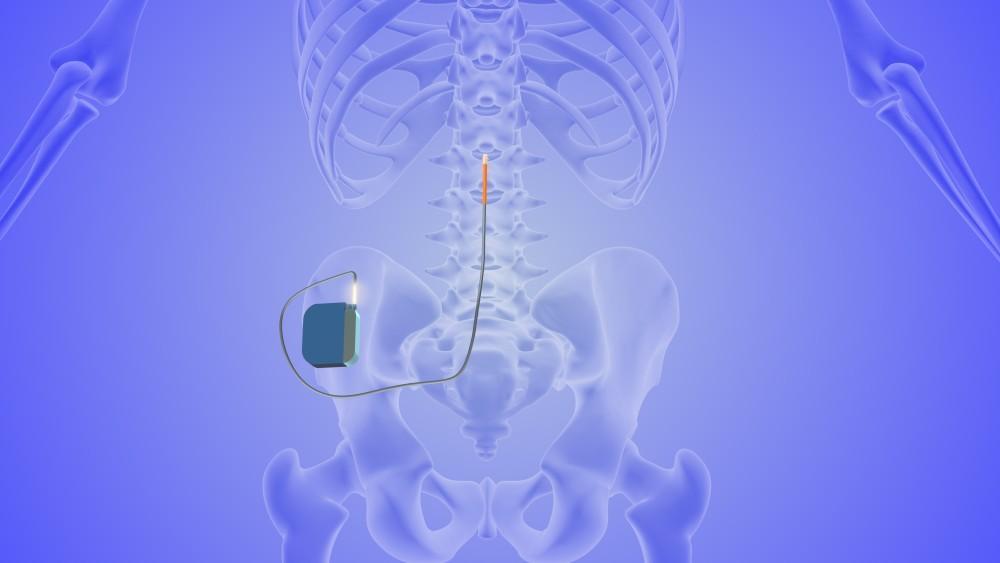
Standard spinal cord stimulation involves placing thin leads along the spinal column. These leads deliver gentle impulses that replace sharp chronic pain with a subtle tingling sensation or complete silence.
Dorsal root ganglion stimulation
Dorsal root ganglion (DRG) stimulation delivers pinpoint relief when pain concentrates in specific regions. This targeted approach focuses on the nerve clusters driving conditions like complex regional pain syndrome (CRPS), groin neuralgia, and post-surgical nerve damage.
What happens before a permanent implant?
To ensure that neuromodulation effectively treats your case of FBSS, our team confirms whether your pain is neuropathic (radiating nerve pain down the legs rather than mechanical structural pain).
Diagnostic MRIs or CT scans help to rule out surgical issues. If you qualify, you can expect to have a 3-7 day temporary trial using temporary leads inserted into the epidural space and connected to an external battery worn on a belt.
This minimally invasive test drive allows you to evaluate the stimulation during daily activities. Success is defined by at least 50% pain relief, after which the temporary leads are easily removed, and a separate minor outpatient surgery is scheduled to implant the permanent generator under the skin.
Could neuromodulation help you?
Persistent pain after back surgery doesn't mean you've run out of options. Neuromodulation can provide another path for carefully selected patients whose chronic nerve pain hasn't responded adequately to conventional treatments.
At Pain Management Specialists, we take a comprehensive, patient-centered approach to complex pain. Our team works with your other physicians and specialists to develop a treatment plan based on your symptoms, needs, and goals.
If you're still hurting after back surgery, contact Pain Management Specialists in Rockville or Frederick, Maryland, to schedule a consultation. Our team is dedicated to helping patients like yourself achieve adequate chronic pain relief.